

Table of Contents
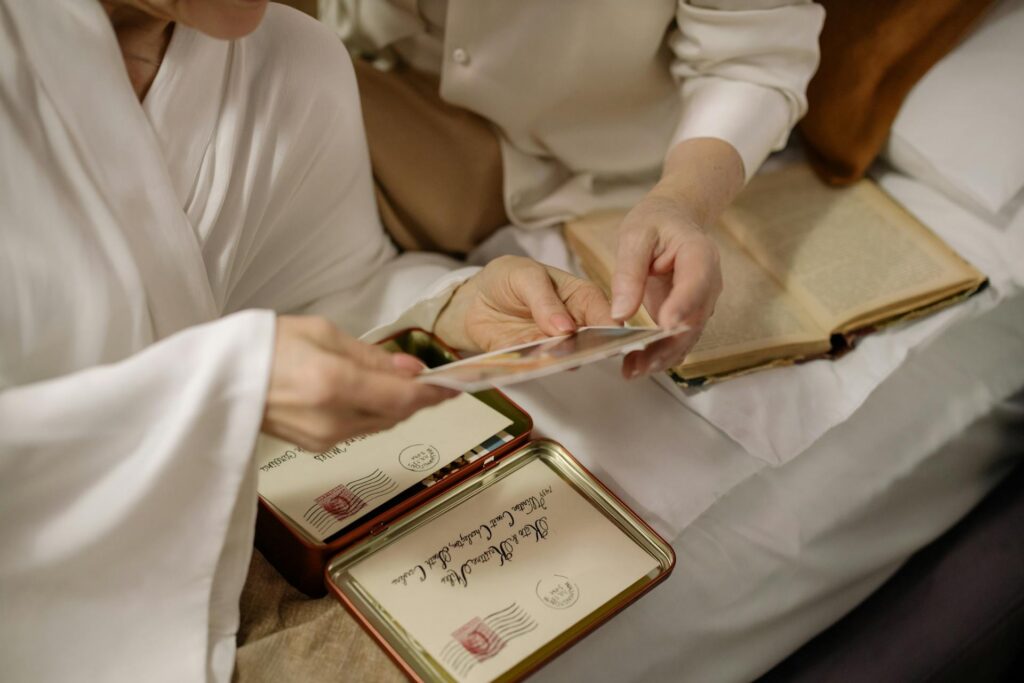
There’s a particular magic in holding an old photograph. You stare into the faces of people you may have never met, yet to whom you are inextricably linked. You feel the pull of a story waiting to be told. This is where the journey into genealogy begins for so many of us: not with a dry list of dates, but with a deep, human curiosity to understand where we come from.
If you’re new to family history, welcome. You’re about to embark on one of the most rewarding adventures. The path can seem overwhelming at first, but the right genealogy tools can transform it from a daunting task into a thrilling detective story. The key is to start with resources that guide you, rather than confuse you. The best genealogy tools feel like having a knowledgeable archivist by your side, offering clues and celebrating your discoveries with you.
I remember my own start. I had a name of my great-grandmother – Anna and a blurry photo. I didn’t know where to begin. The genealogy tools I’ve gathered here are the very ones that helped me piece together her life, from her voyage across the Atlantic to the farm she built her life upon. They can do the same for you. Let’s explore seven essential resources that every beginner should know, each offering a unique key to unlock a different part of your past.
1. Ancestry: The Expansive Family Forest
Think of Ancestry as the grand central station of genealogy. It’s where countless research paths converge. Its true power lies in its staggering size: billions of historical records and a massive DNA database. For a beginner, this scale is your greatest ally.
What makes this genealogy tool so beginner-friendly is its hint system. As you start building your tree, adding names and dates you know – Ancestry quietly works in the background. Like a diligent research assistant, it scours its archives and presents you with potential matches: a census record from 1940, a ship’s manifest from 1910, a birth certificate from a small Midwestern town. Each “shaky leaf” hint is a potential breakthrough, a invitation to confirm a piece of your story. While a subscription is needed for full access, their free trial offers a perfect risk-free way to feel the thrill of that first major discovery.
Pro Tip: Don’t just accept every hint blindly. Use them as clues, then look for corroborating evidence from other sources.
Explore More: Ancestry
2. FamilySearch: The Generous Heart of Genealogy
Run by the Church of Jesus Christ of Latter-day Saints, FamilySearch is the community’s greatest gift to family historians. Its entire monumental archive is free. This commitment to accessibility makes it the most important starting point for anyone mindful of their budget. This is one of genealogy tools, that focuses on accessibility, not profit.
Beyond the free records, FamilySearch fosters a spirit of collaboration. Instead of private trees, it encourages a shared, universal family tree. You might find that a distant cousin across the globe has already painstakingly researched your common great-great-grandparents. This collective effort breaks down research walls and creates a wonderful sense of shared purpose. Their online Research Wiki is also an indispensable guide, offering expert-written articles on how to research specific regions and overcome common stumbling blocks.
Pro Tip: Use the Wiki before you start searching. Knowing what records exist for your ancestor’s location will save you hours.
Explore More: FamilySearch
3. MyHeritage: The Family Album Come to Life
MyHeritage is one of genealogy tools, that offer you a platform for building and organizing your family tree. You can get going for free and pay for more advanced features as you go. They also provide an extensive database of old documents and records.
Their beautiful, user friendly UI is a nice addition, that speeds up your search. There are many way to visualize your family tree, as well as preparation for a print with decorations. Definitely a good starting point if you want a solution, that works out of a box. Utilize free, publicly available data to enhance your search.
Pro Tip: Their free tier lets you build a sizeable tree. Start by inputing all the informations you have there. You can always export the tree to your local disk.
Explore More: MyHeritage
4. Findmypast: A Portal to British and Irish Shores
Genealogy is rarely one-size-fits-all. Success often depends on pinpointing the right resource for your ancestor’s homeland. If your roots stretch back to England, Ireland, Scotland, or Wales, Findmypast is an unmissable destination.
Its collections are meticulously curated for these regions, offering exclusive access to archives like the 1939 Register – a critical snapshot of England and Wales on the brink of war and deep collections of parish records that go back centuries. The search engine understands the nuances of researching in the British Isles, helping you navigate common names and changing boundaries. For anyone with a family story that begins “we came from…” somewhere in the UK, this site is your gateway.
Pro Tip: Their 14-day free trial is perfect for a deep dive into your British and Irish roots. Use this genealogy tool to find more informations on your British ancestors.
Explore More: Findmypast
5. The U.S. National Archives: The Source of Truth
For those tracing American stories, the National Archives website (Archives.gov) is one of the best genealogy tools. This isn’t a commercial tree-builder; it’s the official repository of the U.S. federal government. Here you find the original, unedited records: federal census sheets, military service files, immigration logs.
Learning to navigate it is a rite of passage for any serious U.S. researcher. It teaches you to work with primary sources – the gold standard of genealogical proof. Their beginner’s guides are excellent, walking you through how to request a Civil War pension file or navigate a ship’s passenger list. The records you find here provide the documented evidence to support the names and dates in your tree.
Pro Tip: Start with the census. It’s the backbone of American genealogy and places your family in a specific time and place every ten years.
Explore More: U.S. National Archives
6. Google: The World’s Most Powerful Research Assistant
Never underestimate the simple search engine. Google is a phenomenally powerful and free genealogy tool when used strategically. Go beyond a basic name search.
Use quotation marks to search for an exact phrase: “Michael O’Shea” “County Kerry” “coal miner”. This can unearth digitized books, historical society webpages, or transcribed news articles that commercial sites might have missed. Google Books has millions of scanned volumes, including local histories and city directories. Use Google Images to reverse-search a photograph, and Google Maps to virtually walk the streets of your ancestor’s village. It’s about being a detective, and Google is your magnifying glass.
Pro Tip: Combine your ancestor’s name with a location, a year, and a keyword like “obituary” or “farm” for surprisingly specific results.
7. PhotoConnect: Where Pictures Hold the Key
And this brings us back to where we started: the photograph. What if the mystery of an unknown person in your old family album could be solved by comparing it to thousands of others? This is the innovative vision behind PhotoConnect.
This platform starts with the understanding that our oldest photos are often our most cherished, yet most mysterious, relics. PhotoConnect uses sophisticated face recognition technology to scan your uploaded photos and find visual matches across its network of users. That unidentified couple in your album might be recognized because their portrait also exists in a second cousin’s collection, a cousin you can then connect with.
But PhotoConnect is more than just facial recognition. Its geo-search feature allows you to find photos tagged near a specific location, helping you visualize your ancestral homeland. It incorporates social features, allowing you to chat with matches, share stories, and verify information collaboratively. For a beginner, it offers a uniquely personal and immediate way into genealogy. You’re not starting from zero; you’re starting with the faces that have been looking out at you from your own history all along.
Explore More: PhotoConnect
Your Story is Waiting
The journey into your family’s past is a deeply personal one. There will be moments of frustration, but they are far outweighed by the sheer joy of connection – the moment you find a long-lost record, put a name to a face, or connect with a relative you never knew you had.
The best advice is to start with what you know. Talk to your oldest relatives. Write down their stories. Look at the photos in your home. Then, let these genealogy tools guide you. You might begin with the free resources of FamilySearch, use Ancestry to expand your tree, and then turn to PhotoConnect to solve the mysteries in your photo album. Each tool offers a different path into the past.
Your family’s story is a tapestry woven from countless lives. It’s waiting for you to discover it, one thread at a time. So, take that first step. You might be amazed at what you find.